أنس طعمة
- طبيعة العمل
- أكاديمي
- المهنة
- نائب رئيس الجامعة للابتكار والذكاء الاصطناعي
- البريد الإلكتروني
- [email protected]
- هاتف المكتب
- (+970) 9 2345113 Ext. 2170

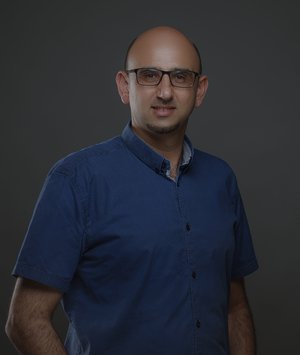
أنس طعمة
- طبيعة العمل
- أكاديمي
- المهنة
- نائب رئيس الجامعة للابتكار والذكاء الاصطناعي
- البريد الإلكتروني
- [email protected]
- هاتف المكتب
- (+970) 9 2345113 Ext. 2170
- Course Title
- Machine Learning and Data Mining for Bioinformatics (Master)
- Course Number
- 467708
- Instructor Name
- أنس طعمة
- Contact Information
- [email protected]
- Semester(s) and academic year(s)
- First Semester 2025
- Compulsory / Elective
- Compulsory
- Introduction
- Fundamentals
- Frequent Patterns, Association and Correlations
- Supervised Learning – Classification
- Linear Regression
- Decision Trees
- Random Forests
- Rule-Based Classification
- Support Vector Machines
- K-Nearest-Neighbor (K-NN)
- Genetic Algorithms
- Model Evaluation and Selection
- Improving Classification Accuracy
- Neural Networks and Deep Learning
- Data Representation and Understanding
- Data types, description, similarity and visualization
- Outlier Analysis and Detection
- Data Preprocessing
- Data cleaning, integration, reduction and transformation
- Prediction
- Introduction to Unsupervised Learning - Clustering
This course introduces the main techniques of machine learning and data analysis with a focus on applications in bioinformatics. Students will learn the complete workflow, from exploring and preprocessing biological data to developing intelligent systems capable of learning from patterns in complex biological information. The course emphasizes practical skills in data cleaning, analysis, and visualization using graphical user interface tools such as Orange, which provide an interactive environment for building and testing workflows, alongside programming libraries such as Scikit-Learn, TensorFlow, and Keras. By the end, students will be able to design, implement, and evaluate computational models that support bioinformatics research and decision-making.
At the end of this course, the students will be able to:
- Analyze, preprocess, and visualize biological and biomedical datasets.
- Select appropriate machine learning techniques to address bioinformatics problems such as disease prediction.
- Implement these techniques using Orange workflows in combination with programming libraries like Scikit-Learn, TensorFlow, and Keras.
- Evaluate and optimize models to improve performance and ensure reliable results in bioinformatics applications.
Textbooks:
- Aurélien Géron. Hands-On Machine Learning with Scikit-Learn, Keras, and TensorFlow: Concepts, Tools, and Techniques to Build Intelligent Systems. 2nd Edition. O'Reilly Media, 2019. ISBN: 1492032646, 978-1492032649.
- Jiawei Han, Jian Pei, Micheline Kamber. Data Mining: Concepts and Techniques. 3rd Edition. Elsevier, 2011. ISBN: 0123814804, 9780123814807.
Tools:
- Orange, Scikit-Learn, TensorFlow and Keras.
| Activity | Percent (%) |
|---|---|
| Midterm | 30% |
| HWs/Project | 35% |
| Final | 35% |